


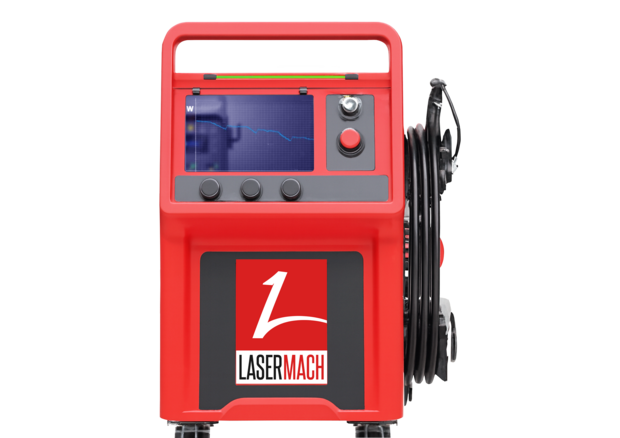
World's First Self-healing laser welding machine Auto calibration of your welding machine
For professionals in the metal fabrication industry, it’s crucial to ensure that all welding machinery operates at peak performance and consistently produce reliable welding results throughout their operational lifespan.
The power attenuation of laser welding machines is a common problem during longer-term use. To solve this problem, Lasermach has introduced power self-healing technology. This auto-calibration technology can monitor the power output of the laser in real time and automatically perform power repairs on a regular basis to ensure stable power during welding process and avoid fluctuations affecting welding quality. This innovative design not only improves the reliability and stability of the equipment, but also extends its service life.
Welding machine calibration is a fundamental step in ensuring the excellence and reliability of welded structures and components. It is essential for welding equipment to maintain long-term accuracy, quality, and safety, this to ensure Consistent Quality in Welded Products. It is a process that verifies and documents that the welding equipment is operating within the specified tolerances for optimal performance. Using a welding machine that isn't calibrated will lead to mistakes, potentially resulting in expensive rework and frustration for everyone involved.

Companies with ISO 9001-certified quality management systems are obliged to have a systematic verification system for their welding machines to ensure consistent product quality.
Now with our Master-Pro series you can forget the yearly or half-yearly calibration, which costs each time between 100 and 1200 euro, depending the machine. Not to forget the lost production time: the machine is stopped and do not produce anything and do not forget to add eventual transport cost.
Moreover, welding machine calibration aligns with industry-wide standards and guidelines which dictate the necessary precision for various welding applications. Adhering to these standards is crucial, not only to meet regulatory compliance but also to fulfill customer expectations. Clients depend on the reliability of welded products, especially in sectors like aerospace, automotive, and construction, where the quality of a weld could directly impact safety and functionality.
Ensuring Accuracy: Calibration maintains the accuracy of the welding machine, leading to improved control over weld penetration, heat input, and bead formation.
Reducing Scrap Rates: Accurate machines mean fewer errors in welding, which in turn reduces material waste and rework, optimizing production efficiency.
Preserving Equipment Life: Regular calibration can help detect and prevent equipment malfunctions, subsequently increasing its lifespan and operational dependability.
Ready to create your own Template?
Checkout our documentation on SitePackages with a ste by step tutorial for turning a basic design template (HTML, CSS, JavaScript files, etc.) into a fully working, mobile-responsive website powered by TYPO3.